Physical Address
304 North Cardinal St.
Dorchester Center, MA 02124
Physical Address
304 North Cardinal St.
Dorchester Center, MA 02124

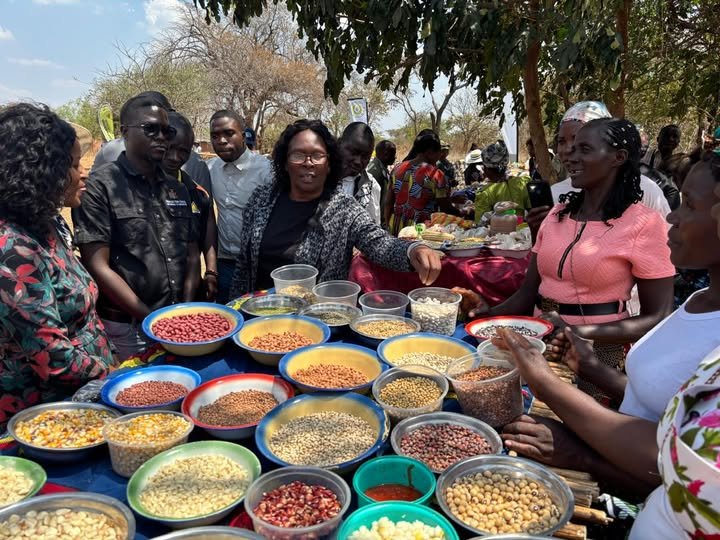
Farmers in Shibuyunji District have called for urgent government action against highly hazardous pesticides, limited recognition of indigenous seeds and inadequate preparedness for the effects of climate change.
Delivering a communique on behalf of farmers Evwananji Nachalwe warned that these challenges are threatening their health, agricultural production and livelihoods, and called for practical interventions rather than awareness alone.
She said some highly hazardous pesticides, including products they believe have been banned elsewhere, are still appearing on the Zambian market, with potential consequences for human health and the environment.
Ms Nachalwe says farmers are calling for the pesticides to be phased out and for greater support for safer alternatives and agroecological farming. “We express our concern over these highly hazardous pesticides with their potential impacts on human health and the environment,” she said.
She said farmers are also demanding for recognition of local seed varieties in formal agricultural programmes and markets, as well as timely climate and disaster alerts and increased investment in climate preparedness.
This was during a two-day Media tour of Shibuyunji district organised by Community Technology Development Trust CTDT that took place on the 10th and 11th September 2026 during which farmers gathered for a Dialogue at Medzaland Community seed bank in mamvule, and later held a farm and food fair to celebrate seed diversity and farmer networking.
Representing the District Commissioner, District Social Welfare Officer Cecilia Mungamba acknowledged the farmers’ concerns and recommendations as valid, reaffirming government’s commitment to addressing them.
Ms Mungamba also urged farmers to take agriculture seriously, describing it as “a backbone of communities.” She commended CTDT and other partners for organising the media tour, farmers’ dialogue and farm and food fair aimed at celebrating seed diversity while promoting networking, knowledge-sharing and learning among farmers.
Meanwhile, CTDT Program’s Manager Edwin Ambwino says the organisation will continue equipping farmers with knowledge and skills in agroecology to cushion the effects of climate change, while promoting indigenous seeds and the use of organic manure.
The farmers have equally committed to conserving local seed, reducing reliance on hazardous pesticides and adopting climate-resilient practices.
Their appeal is now for government and other stakeholders to move from listening to action—because for farmers facing climate change, unsafe chemicals and shrinking markets, protecting agriculture means protecting both livelihoods and the future of their communities.
By: Naomi C. Mwanza